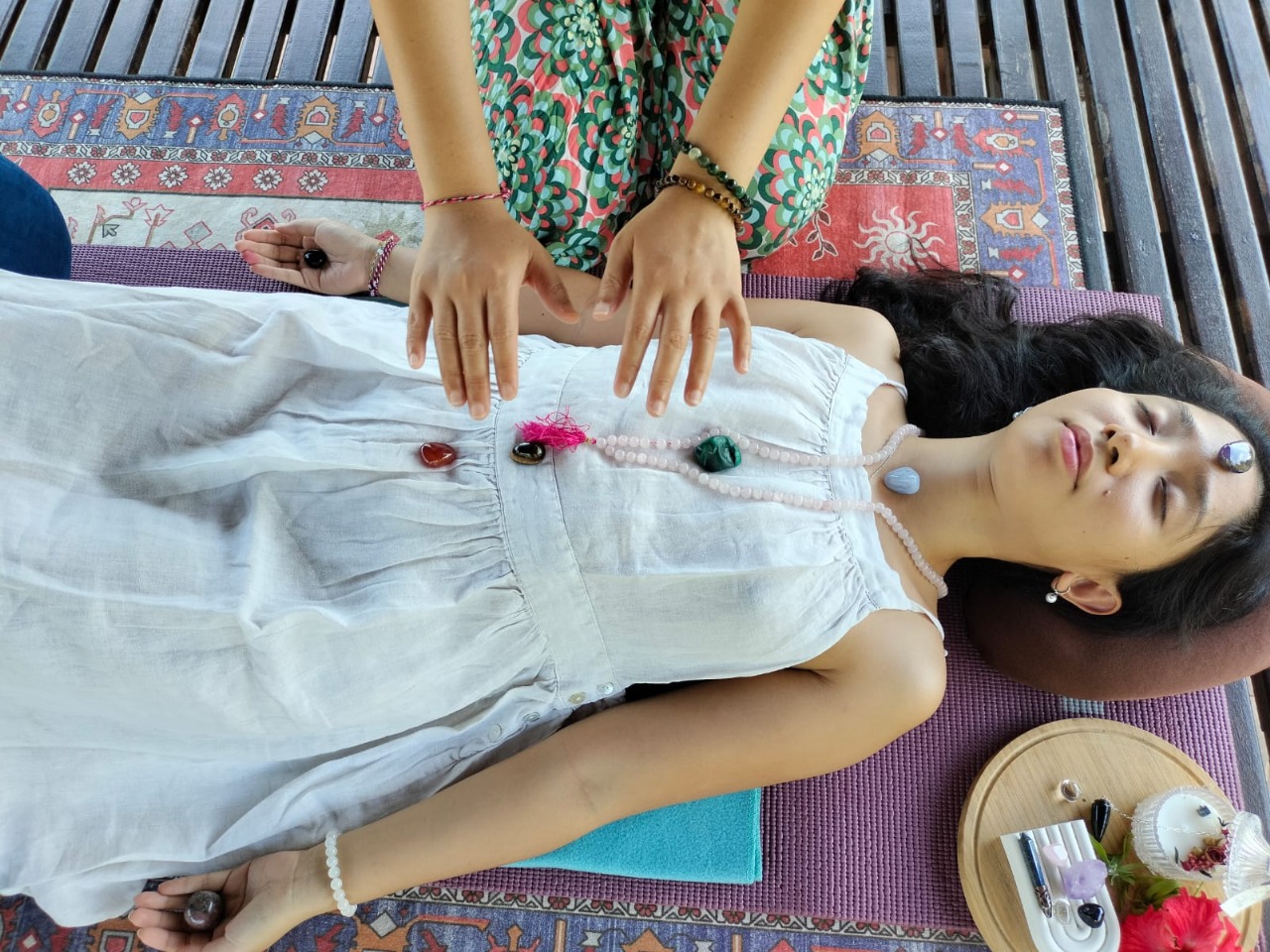
When people think about healing sessions, they often imagine a practitioner guiding them through the experience, offering insights, or speaking throughout the treatment. Recently, one of our clients shared that during a Reiki session she received previously, the practitioner guided her throughout the session.
This raised an interesting question:
Why do some Reiki practitioners talk during a session, while others remain mostly silent?
The truth is that there is no single "right" way to practice Reiki. Different practitioners have different styles, and each approach can offer its own benefits. Some practitioners offer verbal guidance, share intuitive messages, or talk clients through their experience. Others choose to work primarily in silence.
Creating Space for Your Own Experience
One of the greatest gifts of silence is that it allows you to connect with your own experience.
During a Reiki session, people may notice physical sensations, emotions, memories, images, thoughts, or simply a deep sense of relaxation. These experiences often arise naturally when the mind becomes quieter and the body feels safe enough to let go.
If a practitioner is speaking throughout the session, your attention may naturally shift outward. You may find yourself focusing on their words rather than noticing what is happening within you.
Silence invites you to become the observer of your own healing journey.
The Difference Between Guided and Silent Reiki Sessions
Some Reiki practitioners choose to talk throughout a session, offering intuitive messages, observations, or gentle guidance as the treatment unfolds. Others prefer to work primarily in silence, allowing the client to immerse themselves fully in their own experience.
Neither approach is inherently better than the other. They simply create different experiences.
In a guided Reiki session, the practitioner's words may help direct attention, provide reassurance, or offer insights along the way.
In a silent Reiki session, there is more space to notice your own sensations, emotions, thoughts, and inner responses without external influence. Rather than being told what you may be experiencing, you are invited to discover it for yourself.
For many people, this quiet space can feel deeply restorative. It allows the mind to settle, the body to relax, and awareness to naturally turn inward.
Everyone experiences Reiki differently. Some people feel warmth or tingling. Others experience emotional release, mental clarity, or a profound sense of peace. Some simply enjoy a rare opportunity to rest deeply.
There is no right or wrong way to experience Reiki. What matters most is finding an approach that feels supportive and aligned with your personal preferences and needs.
Trusting Your Inner Wisdom
Many of us are conditioned to seek answers outside of ourselves. Yet healing often begins when we learn to listen inward.
Silence creates an opportunity to reconnect with the wisdom of your body, your emotions, and your intuition.
Rather than being told what something means, you are invited to notice what you feel. Sometimes the most meaningful insights emerge not through conversation but through quiet awareness.
By allowing space for your own experience, you may discover a deeper sense of trust in yourself.
Reflecting On the Experience
While some practitioners choose to talk during a Reiki session, others prefer to leave space for reflection until the treatment is complete.
Afterwards, clients often enjoy discussing what they noticed, asking questions, or sharing any sensations, emotions, or insights that emerged. These conversations can help bring awareness to the experience while preserving the quiet space that allowed it to unfold naturally.
For many people, the combination of silence during the session and reflection afterwards offers the best of both worlds.
Every Practitioner Has Their Own Style
Some Reiki practitioners incorporate verbal guidance, intuitive messages, coaching, or energy readings into their sessions. Others work with very little conversation once the treatment begins.
Neither approach is inherently better than the other. What matters most is finding a practitioner whose style resonates with your needs and preferences.
Some people feel supported by guidance and conversation. Others find that silence allows them to relax more deeply and connect more fully with themselves.
The beauty of Reiki is that it can be offered in many different ways while still honoring the same intention: supporting balance, relaxation, and well-being.
The Gift of Stillness
We live in a world filled with conversations, notifications, opinions, and constant stimulation. Rarely are we given permission to simply BE.
Silence can feel unfamiliar at first. Yet within that quiet space, something remarkable often happens. The mind softens. The body relaxes. Emotions that have been waiting to be acknowledged may gently rise to the surface. Insights can emerge without force.
Sometimes healing does not require more information, more advice, or more words.
Sometimes it begins with creating enough space to listen.
Whether you prefer a Reiki session that includes guidance and conversation or one that embraces silence, what matters most is finding an approach that helps you feel safe, supported, and connected to yourself.
The quiet moments are often where we hear ourselves most clearly.